


RONCOS
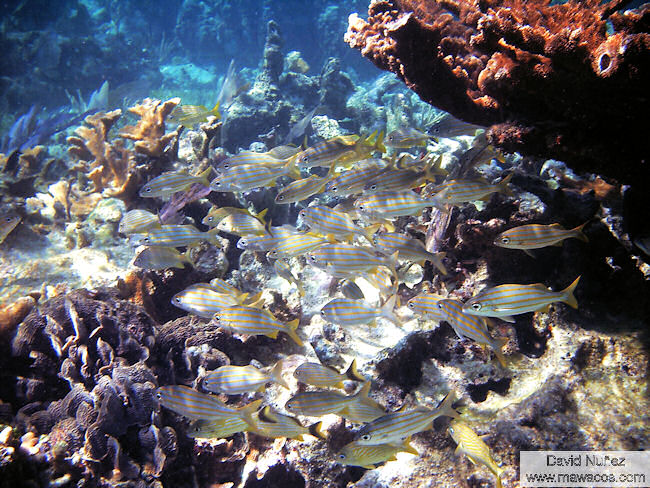
GRUNTS
GRUNTS
| Photos by and text by David Nuñez |
| La familia de los Roncos consiste de más de 150 especies de agua salada, salobre y dulce, y debe su nombre al ruido que hacen con sus dientes. Por lo general permanecen inactivos durante el día, y se les puede ver en pequeños grupos casi inmóviles, ya sea en el arrecife, sobre pastos marinos o en los manglares. De noche cazan invertebrados (crustáceos y moluscos) y peces pequeños. Es una familia muy variada y las especies locales incluyen algunos de los peces más vistosos del arrecife, por sus rayas coloridas. Las particularidades del color, posición y ancho de las rayas son la clave para identificar a algunos de las especies más representativas. |
| Named for the noise they can make by grinding their teeth, the Grunt Family includes 150 marine, brackish and freshwater species worldwide. Usually inactive during the day, they can be found idling in small schools among reefs, mangrove and seagrass beds. At night they hunt invertebrates (crustaceans & mollusks) and smaller fish. It is a varied family, and local specimens include some of the more colorful reef fish, most of which have distinctive colorful stripes. The precise colors, position, and width of stripes is the key to identifying a few of the more obvious members. |
| Ronco Condenado French Grunt Haemulon flavolineatum |
| Ronco Boquichica Smallmouth Grunt Haemulon chrysargyreum |
| Ronco Catire Bluestripe Grunt Haemulon sciurus |
| Burro Payaso Porkfish Anisotremus virginicus |
| Ronco Plateado Sailor's Choice Haemulon parra |






| Recomendamos estos libros sobre la Fauna de México. (Los nuestros son bilingues.) |
| To learn more about the Wildlife of Mexico, we recommend the following books. |
|


