


Pastos Marinos
Seagrasses
Seagrasses
| Photos and text by David Nuñez |
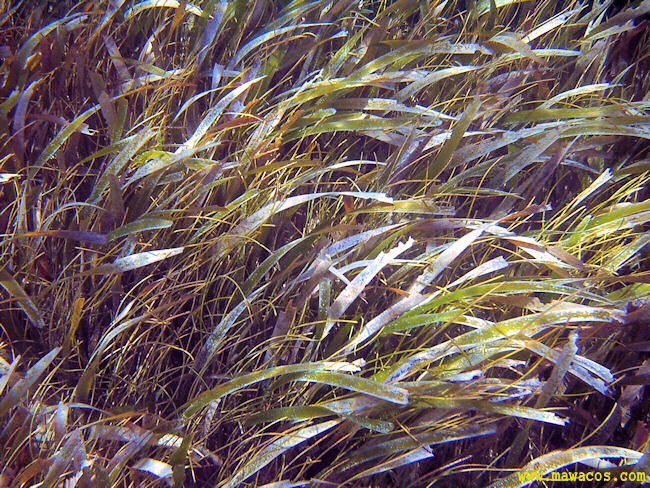
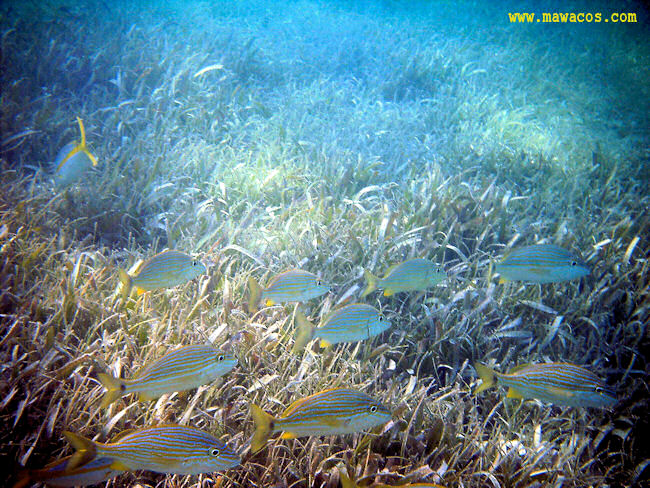
| Los pastos marinos se ubican entre los manglares y los arrecifes coralinos, y son un importante hábitat intermediario que ayuda a mantener las aguas cristalinas, brinda refugio a larvas y jóvenes de muchas especies marinas, y alimenta a algunas de las criaturas más notables del Caribe Mexicano, como son las Tortugas Marinas y los Manatíes. Existen unas 60 especies distintas de pastos marinos que encontramos en bahías y lagunas someras de fondo arenoso. Sus raíces amarran el fondo marino, y sus hojas frenan el agua. Esto ayuda a mantener las condiciones transparentes tan necesarias para la salud de los arrecifes coralinos. A nivel mundial está disminuyendo la cobertura de pastos marinos, amenazados por la contaminación que enturbia las aguas e impide que la luz solar penetre hasta el fondo, lo cual limita las profundidades a las cuales pueden crecerlos pastos. Esta contaminacióna de más favorece el crecimiento de algas a expensas de los pastos, y las algas flotantes bloquean aún más luz solar. La sobrepesca complica la situación al eliminar a especies que se alimentan de las algas. |
| Found between mangroves and coral reefs, seagrass is an important intermediary habitat that helps keep water clear, provides shelter to larvae and juveniles of many sea creatures, and feeds some of the Mexican Caribbean’s most notable animals, including Green Sea Turtles & Manatees. There are roughly 60 different species of seagrass , found in shallow bays and lagoons with silty or muddy bottoms. Their roots stabilize the seabed, and leaves slow down the water. This helps maintain the clear conditions so necessary for coral reef health. Seagrass coverage is declining worldwide, threatened by pollution which decreases water clarity, reducing the sunlight that reaches the ocean floor, and thus limiting the depths at which seagrass can grow. This pollution also favors the growth of algae at the expense of seagrass; and free-floating algae further block sunlight. Overfishing can compound the problem by removing species that feed on algae. |





| Recomendamos estos libros sobre la Fauna de México. (Los nuestros son bilingues.) |
| To learn more about the Wildlife of Mexico, we recommend the following books. |
|


