


Cañamo de la India, Yute de Java o Kenaf
Kenaf
Hibiscus cannabinus
Kenaf
Hibiscus cannabinus
| Photos and text by David Nuñez |
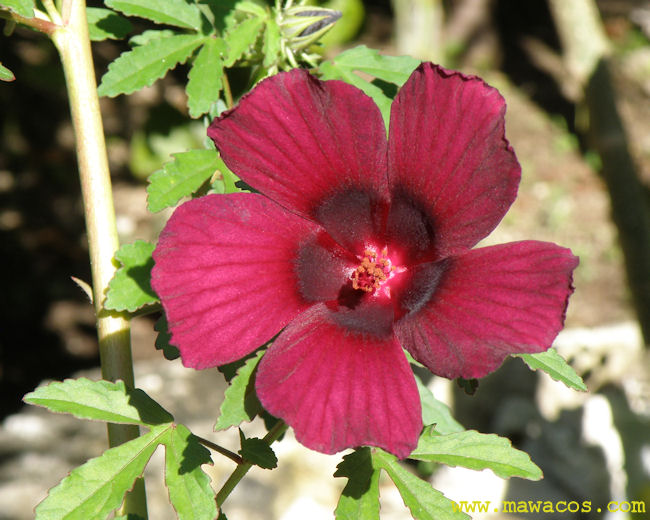
| Este hibisco tiene hojas parecidas a las de la marihuana, de allí su nombre científico. Merece mención especial no solo por sus bellas flores tintas y aterciopeladas de uso ornamental, sino porque en gran parte del mundo se cultiva con fines industriales, ya que que la fibra de sus tallos se usa para hacer desde papel hasta sogas, y el aceite de sus semillas es comestible o puede ser utilizado como lubricante. Es originario de Asia, y pariente del algodón y quimbombó. |
| This hibiscus has leaves similar to those of marihuana, hence its scientific name. It deserves special mention not just because of its beautiful velvet burgundy flowers that make it a popular ornamental, but rather because in much of the world it is grown for industrial purposes, as the fiber from its stems can be used to make everything from paper to rope, and the oil from its seeds is edible or can be used as an industrial lubricant. It is native to Asia, and a relative of cotton and okra. |






| Recomendamos estos libros sobre la Fauna de México. (Los nuestros son bilingues.) |
| To learn more about the Wildlife of Mexico, we recommend the following books. |
|


