


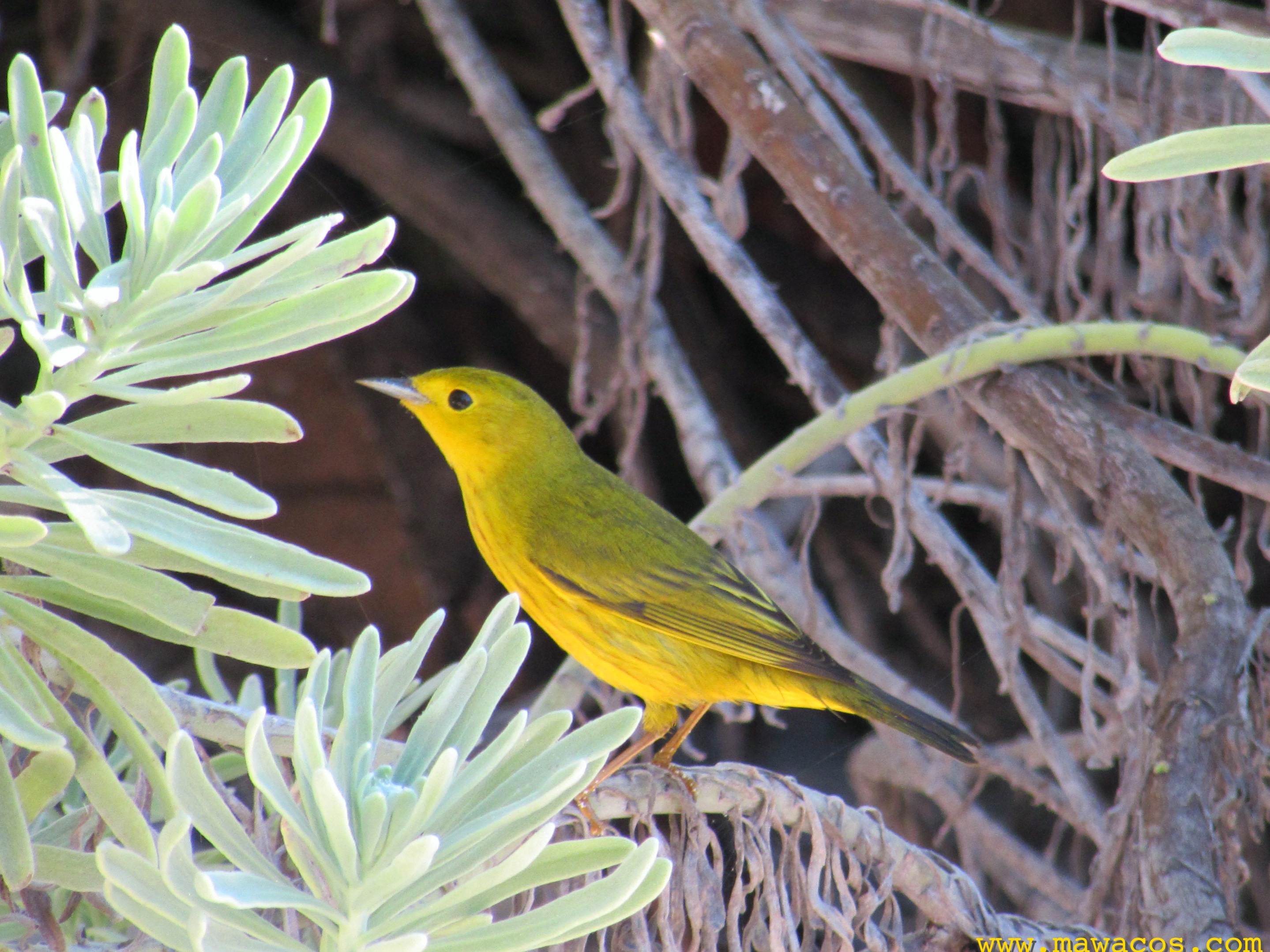
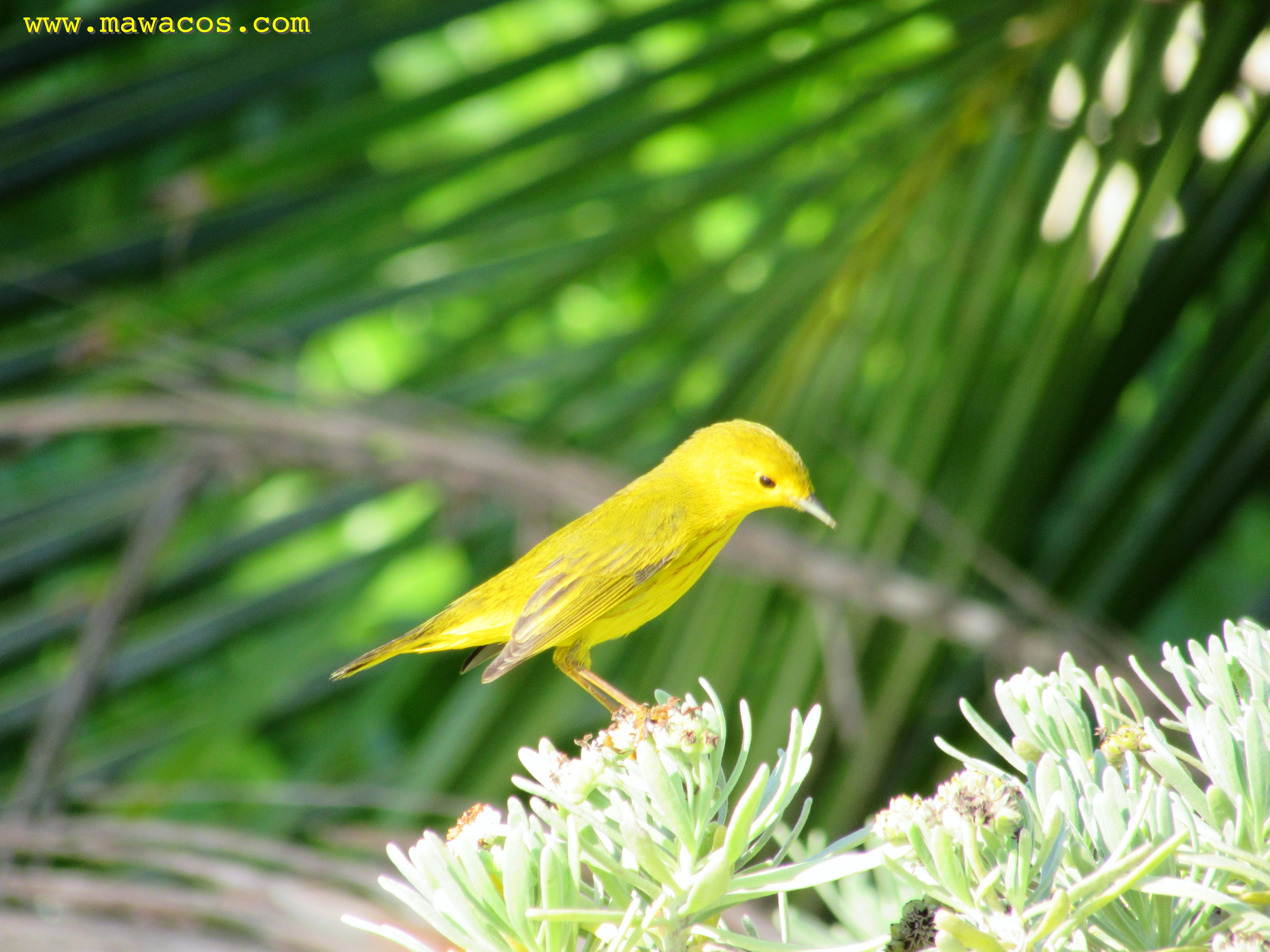
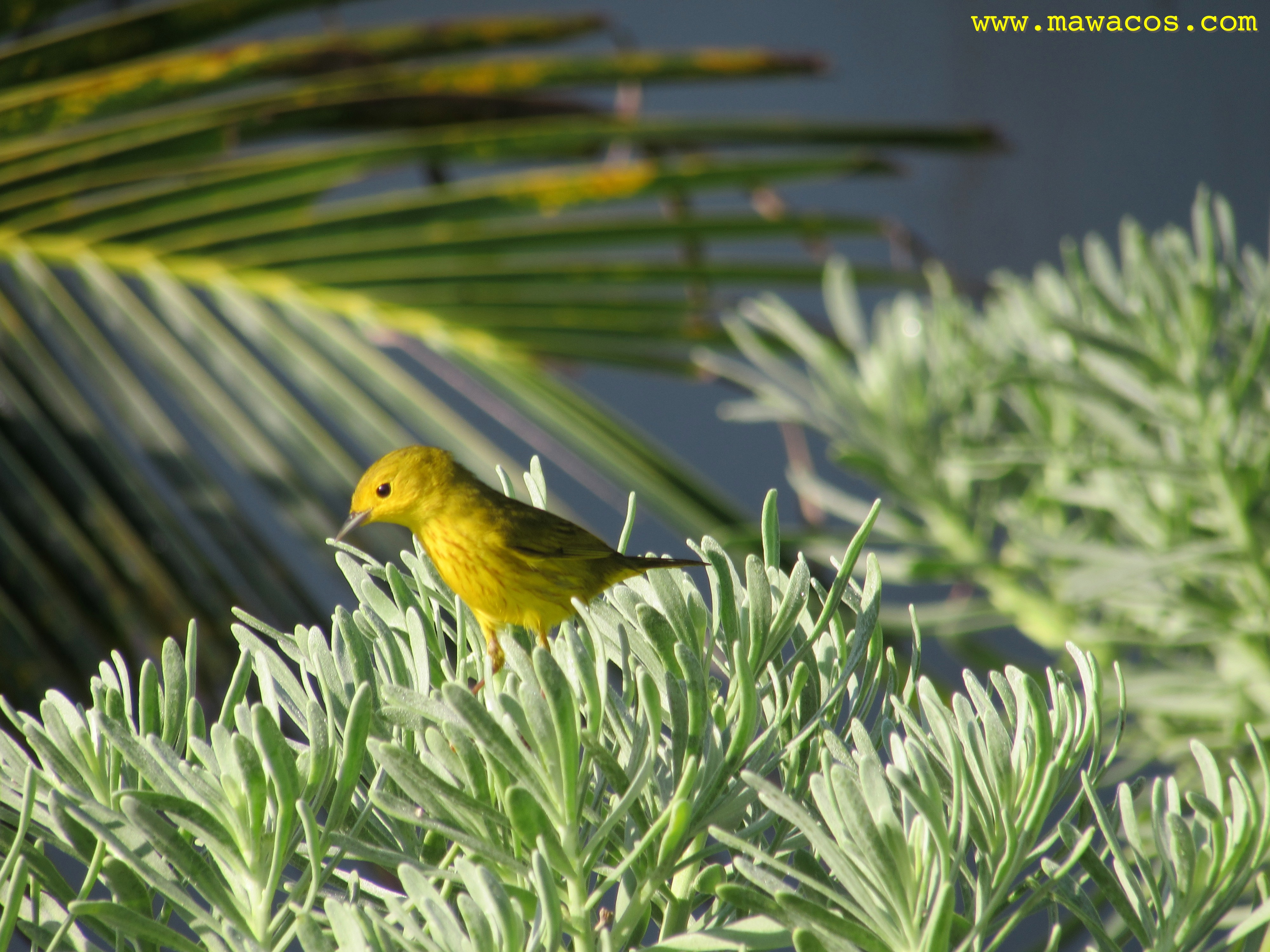
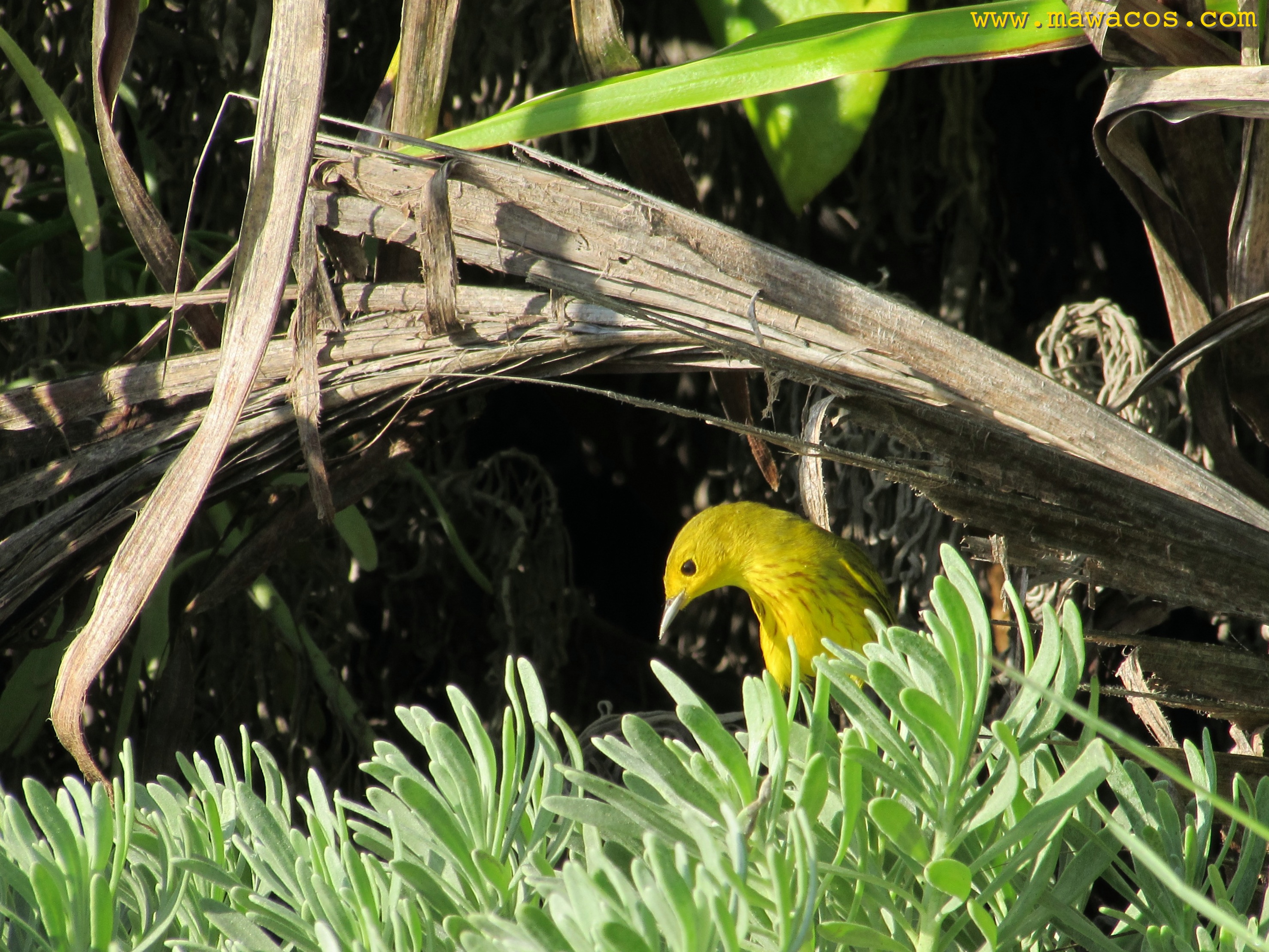
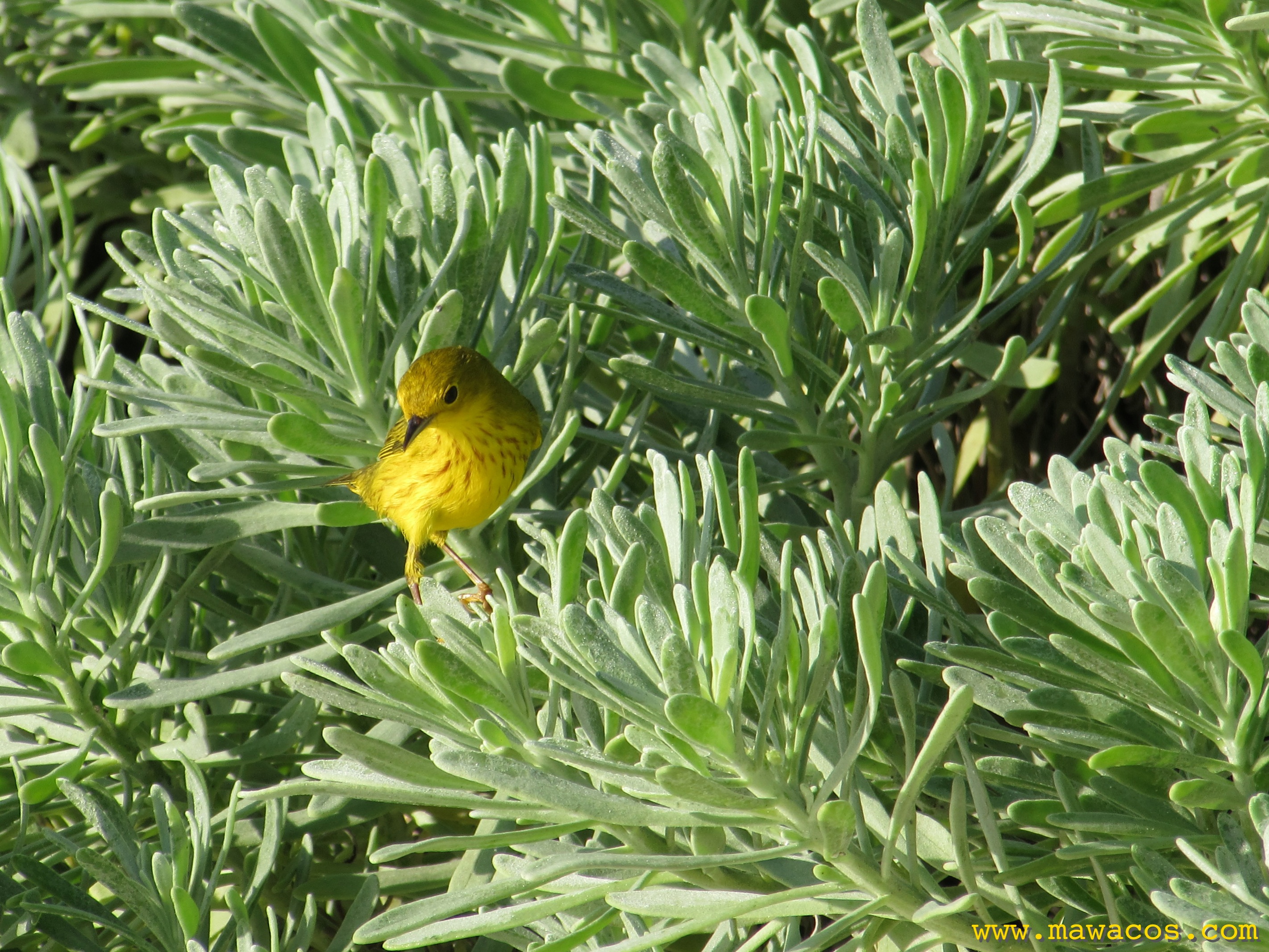
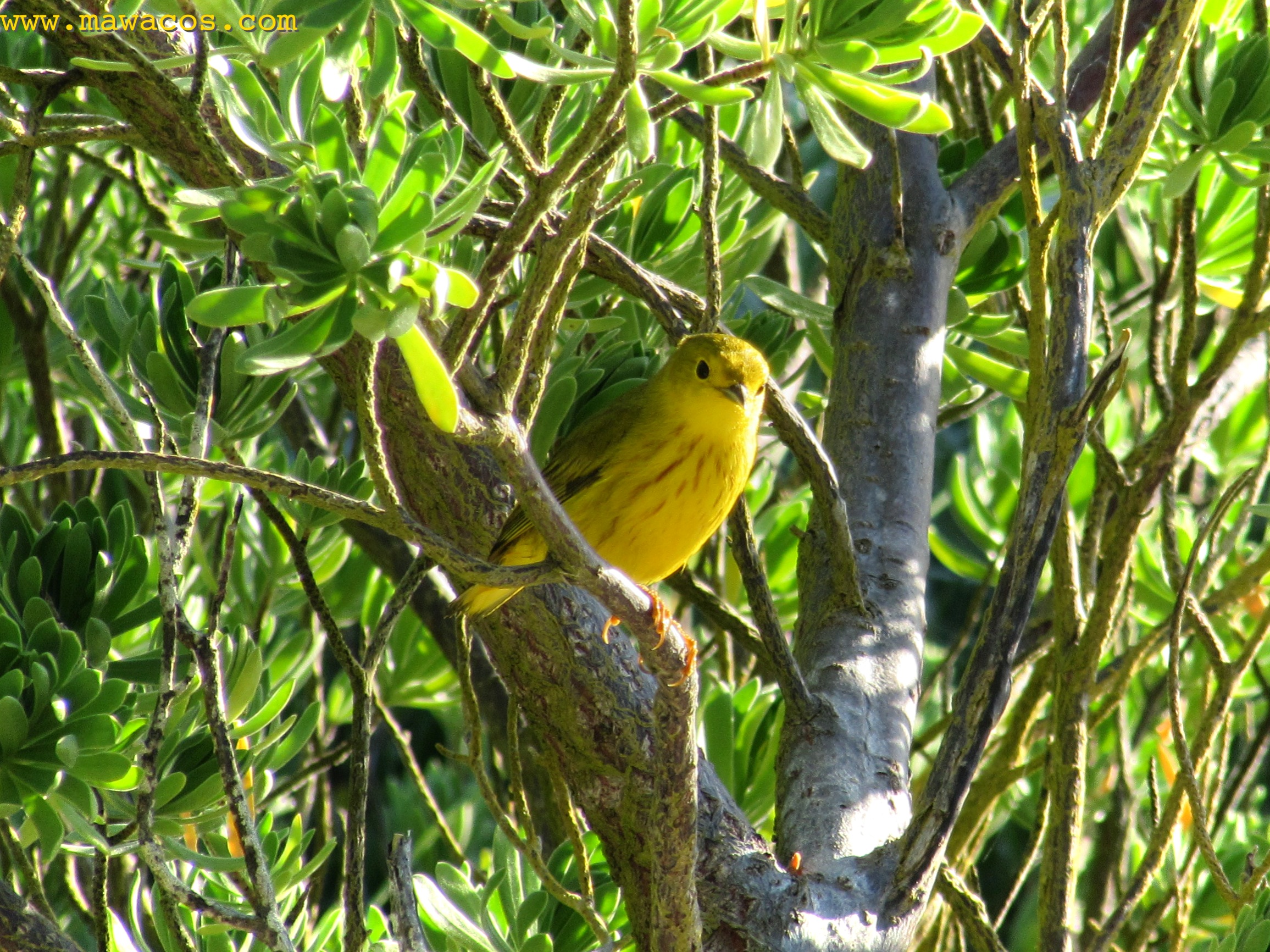
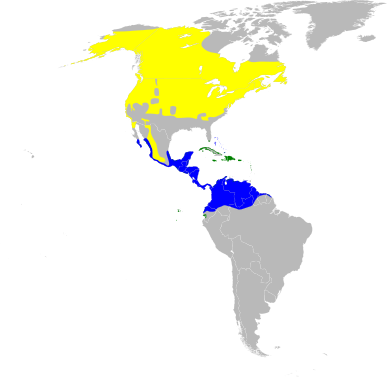
| Recientemente, estando en la playa de, vi un bellisimo pajarito de color amarillo intenso posarse sobre un arbusto. Antes de poder levantar la cámara, voló. Lo busqué el resto del día, pero no pude encontrarlo. Así que me puse como meta del día siguiente no solo encontrarlo, sino fotografiarlo. Y fue así fue. Salí a las 7:25 de la mañana y me encontré de inmediato con la misma ave. Fue lo primero que ví. No tuve que buscar ni 10 segundos. En cuanto llegué a la playa fijé la vista en donde lo había visto el día anterio y allí estaba. Y esta vez posó para varias fotos. Se trata de un Chipe Amarillo (Dendroica petechia o Setophaga petechia), y resulta que es un ave migratoria, cuyo hábitat de verano (AMARILLO) se extiende desde la Sierra Madre Occidental en México hasta la tundra del Artico de Canadá, mientras que su hábitat de invierno (AZUL) se extiende desde el Sur de México (y las costas de Occidente) hasta Ecuador y Venezuela. En el resto del país se le puede ver de paso. |
Chipe Amarillo
Yellow Warbler
Setophaga petechia (Dendroica petechia)
Yellow Warbler
Setophaga petechia (Dendroica petechia)
| Recently while on the beach, I noticed a beautiful little yellow bird resting on a bush. Before I could raise the camera, it flew off. I spent the rest of the day searching for it in vain. So I set a goal for the next day of not only finding it again, but photographing. And that is exactly what happened. I set out at 7:25 a.m. and immediately found the same bird. It was the first thing I saw. I hadn´t been looking for more than 10 seconds. As soon as I arrived on the beach I glanced over to where I had seen it the day before, and there it was. This time it posed for several pictures. It turns out it is a Yellow Warbler (Dendroica petechia or Setophaga petechia), and it turns out it is a migratory bird whose summer habitat (YELLOW) extends from the Western Sierra Madre mountains in Mexico to the Arctic Tundra in Canada. Its winter habitat (BLUE) extends from Southern and Coastal Mexico down into Ecuador and Venezuela. In the rest of the country it can be seen passing through. |
| Photos and text by David Nuñez |




| Recomendamos estos libros sobre la Fauna de México. (Los nuestros son bilingues.) |
| Es victima comun de los Tordos (Molothrus) que son parásitos de nidos. Es decir, el Tordo pone sus huevos en los nidos del Chipe Amarillo para que éste los incube y alimente a sus crías. En caso de que el Chipe se de cuenta del engaño, cubre su nido entero con otro nido, sacrificando sus propios huevos junto con los del intruso. Se alimentan principalmente de insectos, por lo que su presencia es benéfica para los humanos. Aparte son bellisimos. |
| It is commonly the victim of Cowbirds (Molothrus) which are brood parasites. That is to say, the Cowbird will lay its eggs in a Yellow Warbler´s nest, tricking them into hatching and raising its eggs. If the Yellow Warbler happens to notice the invading egg, it will cover its entire nest with a brand new one, sacrificing its own eggs along with the intruding one. They feed mainly on insects, and so their presence is actually beneficial to humans. Plus, they are beautiful. |
|


